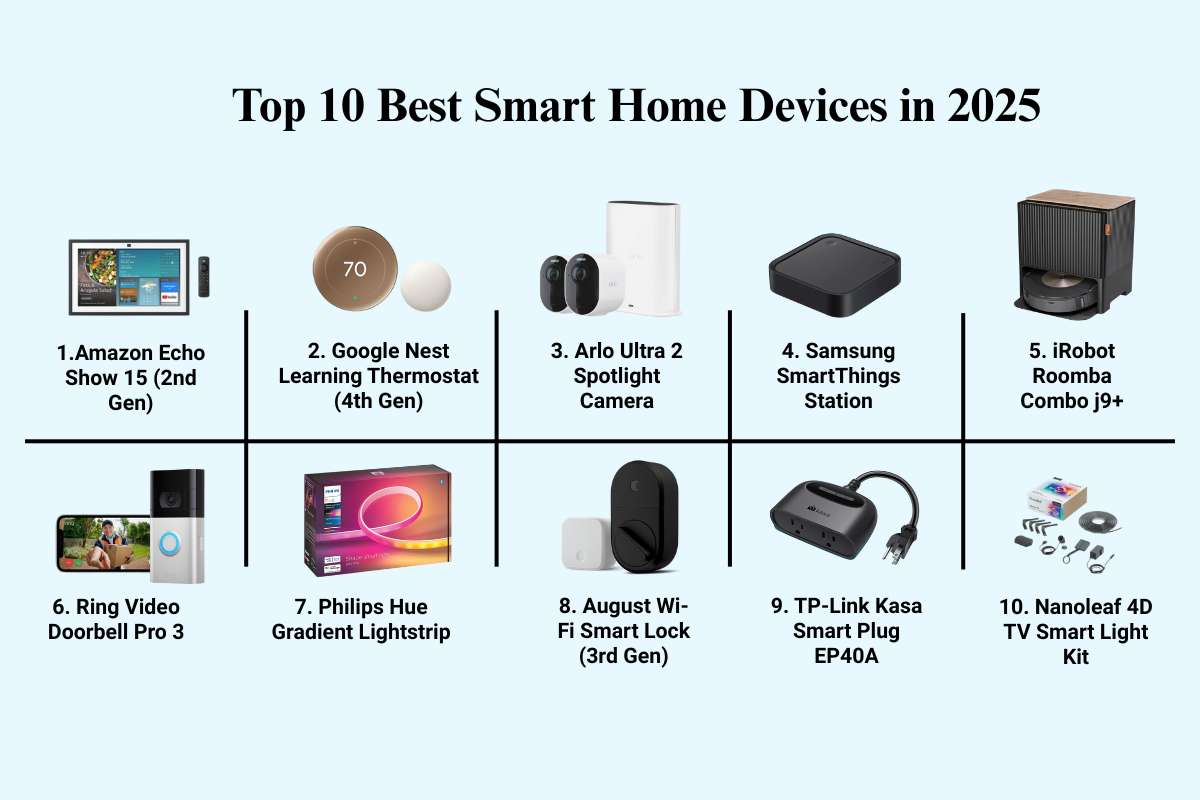
Smart homes in 2026 are no longer a luxury—they are becoming a practical part of everyday living. What once required expensive installations can now be set up in minutes using affordable devices and a smartphone. From controlling lights with your voice to monitoring your home remotely, smart home technology has evolved to make life more convenient, efficient, and secure.
But with so many options available, it can be difficult to know where to start. This guide breaks down the top 10 smart home devices that actually make a difference in daily life, along with a detailed comparison to help you choose wisely.
What Makes a Smart Home “Smart” in 2026
Before diving into the devices, it’s important to understand what defines a smart home today.
- Automation: Devices work based on schedules or conditions
- Remote Access: Control everything from your smartphone
- Voice Control: Integration with Alexa or Google Assistant
- Energy Efficiency: Reduced electricity usage through smart control
- Interconnectivity: Devices working together as one system
The real value of a smart home lies not in individual devices, but in how they interact with each other.
1. Smart Speakers (The Control Center)
Smart speakers act as the brain of your smart home. Devices like Amazon Echo or Google Nest allow you to control lights, plugs, TVs, and more using simple voice commands.
You can ask your speaker to turn off lights, play music, set reminders, or even control multiple devices at once through routines. In India, support for regional languages has made them even more accessible.
Best for: Beginners starting their smart home journey
2. Smart Displays (Visual Smart Control)
Smart displays combine a speaker with a touchscreen. They allow you to watch videos, attend video calls, check security cameras, and follow recipes in the kitchen.
They are especially useful in common areas like the living room or kitchen, where visual interaction enhances usability.
Best for: Families and multitasking environments
3. Smart Bulbs (Lighting Automation)
Smart bulbs are one of the easiest and most affordable ways to start building a smart home. They allow you to control brightness, color, and scheduling through an app or voice commands.
You can set mood lighting, automate lights based on time, or turn them on/off remotely.
Best for: Enhancing comfort and ambiance
4. Smart Plugs (Convert Any Device into Smart)
Smart plugs are extremely versatile. By plugging a regular appliance into a smart plug, you can control it remotely or schedule its operation.
For example, you can automate your geyser, coffee maker, or fan without replacing them.
Best for: Budget-friendly automation
5. Smart Security Cameras (Home Monitoring)
Security cameras are one of the most practical smart devices. They allow you to monitor your home in real-time, receive motion alerts, and record footage.
Modern cameras come with AI features like human detection, night vision, and cloud storage.
Best for: Safety and peace of mind
6. Smart TV Sticks (Upgrade Your Entertainment)
A smart TV stick can transform any regular television into a smart one. It gives you access to streaming apps, voice search, and smart home integration.
It is one of the most cost-effective upgrades for entertainment.
Best for: Streaming and media consumption
7. Smart Switches (Full Home Control)
Unlike smart bulbs, smart switches control entire electrical circuits. This means you can automate fans, lights, and other appliances without changing each device individually.
They are ideal for permanent home automation setups.
Best for: Long-term smart home installations
8. Smart Alarm Clocks (Smarter Mornings)
Smart alarm clocks go beyond just waking you up. They can provide weather updates, control other smart devices, play music, and manage your morning routine.
Some can even trigger routines like turning on lights or starting your coffee maker.
Best for: Productivity and routine management
9. Smart Thermostats / Climate Controllers
Smart thermostats help regulate temperature automatically. While more common in Western countries, similar solutions are emerging in India for AC automation.
They help save electricity while maintaining comfort.
Best for: Energy efficiency and comfort
10. Smart Home Hubs (Advanced Automation)
A smart home hub connects all your devices into one ecosystem. It enables advanced automation where multiple devices work together.
For example, a single command like “Good Night” can turn off lights, switch off appliances, and activate security systems.
Best for: Advanced users and full automation setups
Comparison Table of Smart Home Devices
| Device Type | Primary Function | Control Method | Connectivity | Automation Level | Best For |
|---|---|---|---|---|---|
| Smart Speaker | Central control | Voice + App | Wi-Fi | High | Beginners |
| Smart Display | Visual + control | Touch + Voice | Wi-Fi | High | Families |
| Smart Bulb | Lighting control | App + Voice | Wi-Fi | Medium | Ambiance |
| Smart Plug | Appliance control | App + Voice | Wi-Fi | Medium | Budget automation |
| Security Camera | Monitoring | App | Wi-Fi | High | Safety |
| TV Stick | Entertainment | Remote + Voice | Wi-Fi | Low | Streaming |
| Smart Switch | Circuit control | App + Voice | Wi-Fi | High | Full automation |
| Alarm Clock | Routine management | Voice + App | Wi-Fi | Medium | Productivity |
| Thermostat | Temperature control | App + Voice | Wi-Fi | High | Energy saving |
| Smart Hub | System integration | App + Voice | Wi-Fi/Zigbee | Very High | Advanced users |
How to Build a Smart Home Step by Step
You don’t need to buy everything at once. A smart home can be built gradually.
Step 1: Start with a smart speaker
Step 2: Add smart bulbs or plugs
Step 3: Install a security camera
Step 4: Upgrade to smart switches
Step 5: Integrate everything using automation
This phased approach keeps costs low while ensuring maximum usability.
Real-Life Smart Home Example
Imagine this daily routine:
Morning:
- Alarm clock wakes you up
- Lights turn on automatically
- News and weather play on your speaker
Afternoon:
- Security camera monitors your home
- Smart plugs turn off unused appliances
Night:
- “Good Night” command turns off lights
- Security system activates
- AC adjusts temperature automatically
This level of automation is what makes smart homes truly valuable.
Key Trends in Smart Homes (2026)
Smart home technology continues to evolve rapidly.
- AI-based automation that predicts user behavior
- Cross-device compatibility through Matter protocol
- Increased focus on energy efficiency
- Improved voice recognition and regional language support
- Better privacy and security features
These trends are making smart homes more reliable and accessible than ever.
Final Verdict: What Should You Buy First?
If you are just getting started:
- Begin with a smart speaker
- Add smart bulbs or plugs for immediate impact
- Invest in a security camera for safety
- Upgrade to switches for full control
This approach ensures that every purchase adds real value.
Smart home devices in 2026 are no longer about showing off technology—they are about solving everyday problems. Whether it’s saving time, reducing electricity bills, or improving home security, these devices offer practical benefits.
The key is not to buy everything at once, but to build a system that fits your lifestyle. When chosen correctly, even a few smart devices can significantly improve your daily routine.
A well-designed smart home doesn’t just respond to commands—it adapts to your life.